The Best Carbs to Eat Pre- and Post-Workout
By: STRONG Fitness

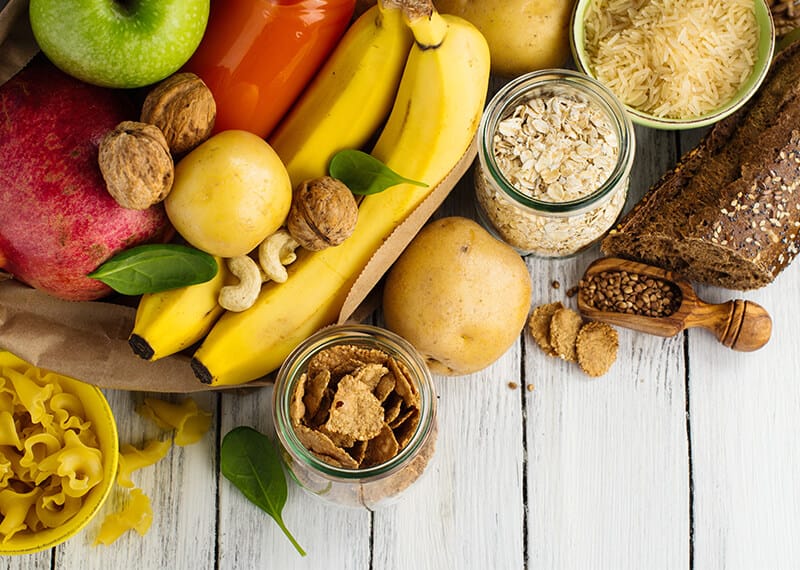
Carbs: The “c-word” that seems to induce anxiety and confusion in anyone looking to get a little leaner. The thing about them? If you want to crush your workouts and build beautiful muscle, you simply can’t do without. “If performance is your goal, then you must have carbohydrates on board, otherwise you’ll think you’re training really hard, but you’re really not,” says Susan M. Kleiner, PhD, RD, owner of High Performance Nutrition consulting firm and author of Power Eating, 4th Ed. According to 2013 research published in the journal Sports Medicine, carbs not only improve endurance performance during prolonged moderate- to high-intensity exercise, they also enhance performance in shorter, higher intensity bouts.
To help you make the most of all your hard work at the gym, we turned to the experts to bring you this guide for choosing the best carbs for better workouts and bigger gains.
PRE-WORKOUT
When it comes to choosing your pre-workout carb source, “The key is, how quickly does it empty from your stomach?” says Kleiner. You don’t want to be doing a high-intensity workout like CrossFit, sprinting, or weightlifting with a full stomach, so you’ll need to choose the right type of carb for your specific circumstance. This means, you’ll want to consider timing.
2 HOURS PRE-WORKOUT
If you’re two hours out from training, or if your training intensity won’t be peaking until an hour into your workout, you have more options. “Any quality carbohydrate source is fair game,” says Brian St. Pierre, MS, RD, CSCS, Director of Performance Nutrition at Precision Nutrition. Think minimally processed, whole food sources with a higher fiber content such as:
- Fruit
- Starchy tubers (like potatoes and sweet potatoes)
- Whole grains (like quinoa, buckwheat, oatmeal, and whole-grain bread)
- Beans & legumes
What’s more, those two hours are enough time for everything to move along into your digestive tract, where the carbohydrates get transformed into useable energy in the form of glycogen, which your body can tap into during high-intensity bouts of training. “Carbohydrates alone are all you need to fuel that high-intensity workout,” says Kleiner.
30 MINUTES PRE-WORKOUT
If you haven’t fueled in the two hours before your workout, as you get closer to training (particularly if you’re going full tilt right out of the gate), you’ll want to opt for easy-to-digest carbs that aren’t overly fibrous. “Beans 20 minutes before your workout may not be the best idea,” St. Pierre points out. Instead, go for:
- Fruit. A ripe banana or peeled apple will be lower in fiber, or try a bit of dried fruit like raisins. Skip the fruit juice, since some people are sensitive to fructose, says Kleiner.
- Refined grains. Try white toast with jam, half a bagel, or white rice.
- A small fruit smoothie. Typically made with some protein and fat, though Kleiner cautions that too much of either can slow down stomach emptying.
And if you’re worried about the sugar, don’t sweat it, since you’ll be burning it off during your workout. Finally, when it comes to pre-workout carbs, keep in mind that “just having them pre-workout is not necessarily more beneficial than having some throughout the day, per se,” says St. Pierre, so experiment to figure out what best fits your lifestyle and training needs.
POST-WORKOUT
Post-workout, popular wisdom tells us we have a 30-minute anabolic window to reach for a refined source of carbs that’ll spike our insulin response and shuttle glycogen into the liver and muscles to be replenished. Well, new evidence has turned that wisdom on its head. According to research, “Insulin only has to be boosted by three to five times above your fasting level to maximize its benefits post-workout, which is easily achieved from a regular-sized mixed meal,” explains St. Pierre.
“The data does not show that we have this 30-minute window anymore, either,” adds Kleiner. If you’ll be sitting down to a wholesome meal that combines carbs with protein and high-performance fats within a couple of hours of your workout, that’s often all most people need to set the stage for repair and recovery. Reach for minimally processed, whole food carbohydrates with some fruit. A fruit smoothie with protein and fats is also a great choice if you’re on the go, but be sure to follow it up with a whole foods meal.
If, however, you’ll be working out again the same day, that’s when you’ll want to reach for a more refined source that’s quickly digested by your body and made available for immediate use.
PORTION SIZES
“If you’re thinking about your stomach while you’re training, you either didn’t eat enough or you ate too much,” says Kleiner. So just how many carbs should you be eating pre- and post-workout? Well, that all depends on the type and duration of your workout, your performance and body composition goals, your size, even the time of day. “There’s no one universal rule that applies to everybody in all circumstances,” says St. Pierre.
A practical way to gauge portion sizes and a go-to method at Precision Nutrition is using your hands. Carbohydrates are measured in cupped handfuls, explains St. Pierre. “So for most people, about one to two cupped handfuls pre- and post-workout is a good starting point,” he says. You can adjust your portion sizes from there depending on your size, your goals, and your activity level. If you’re very active or looking to build muscle, start with two handfuls and increase the amount if needed. If your goal is to lose weight and lean out, go with one handful.
For a more precise calculation, if you’re fueling a high-intensity workout, Kleiner recommends one gram of carbohydrate per kilogram of bodyweight per hour, or half a gram for lower intensity work. So if you’re doing a one-hour HIIT circuit and you weigh 60 kilograms (about 130 lbs), you’ll need about 60 grams of carbs pre-workout.

RELATED ARTICLES






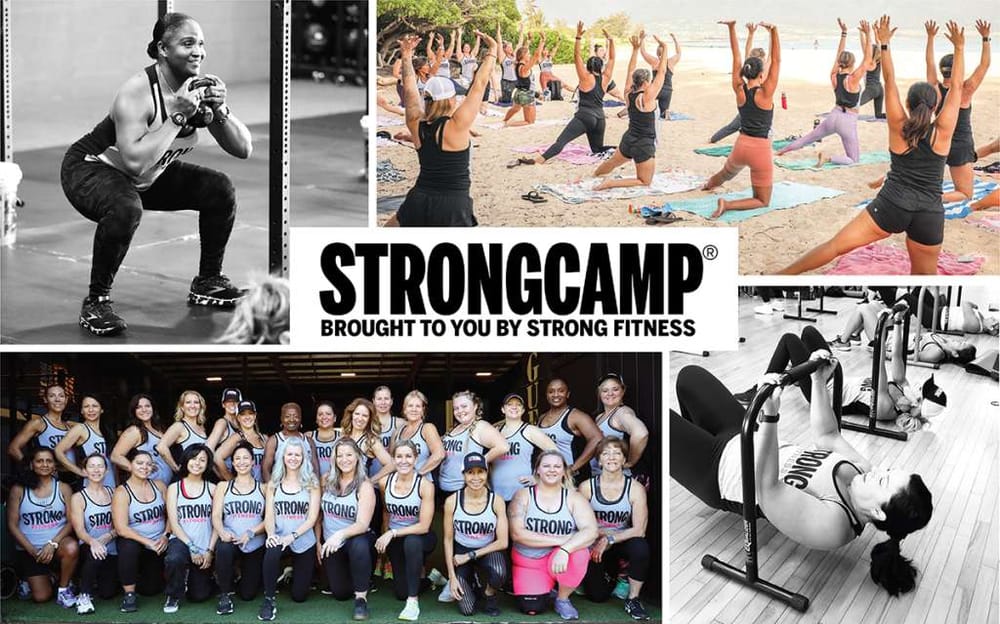
STRONGCAMP IS COMING TO YOUR CITY
STRONGCAMP is a weekend for women of all fitness levels to come together and celebrate their strengths. Where STRONG Fitness Magazine Comes to Life!

get stronger with strong APP
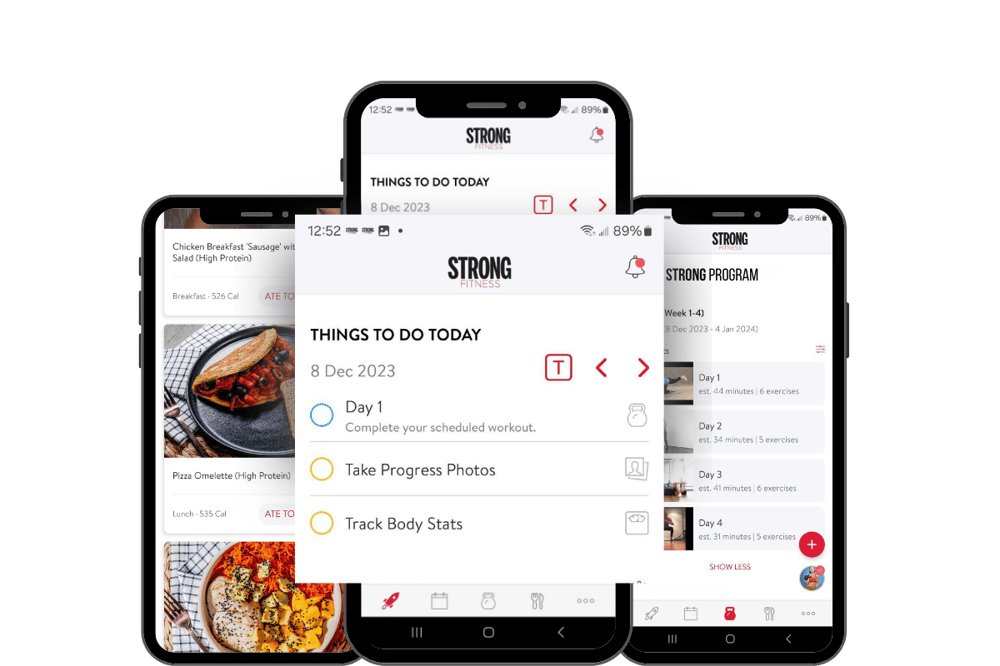
Personalized Fitness at Your Fingertips. Tailored workouts and meal plans, optimized for your lifestyle. Track and progress with every session, powered by the latest in fitness innovation.
AVAILABLE WITH DIGITAL, COMBO, AND PREMIUM SUBSCRIPTIONS
get stronger with strong APP
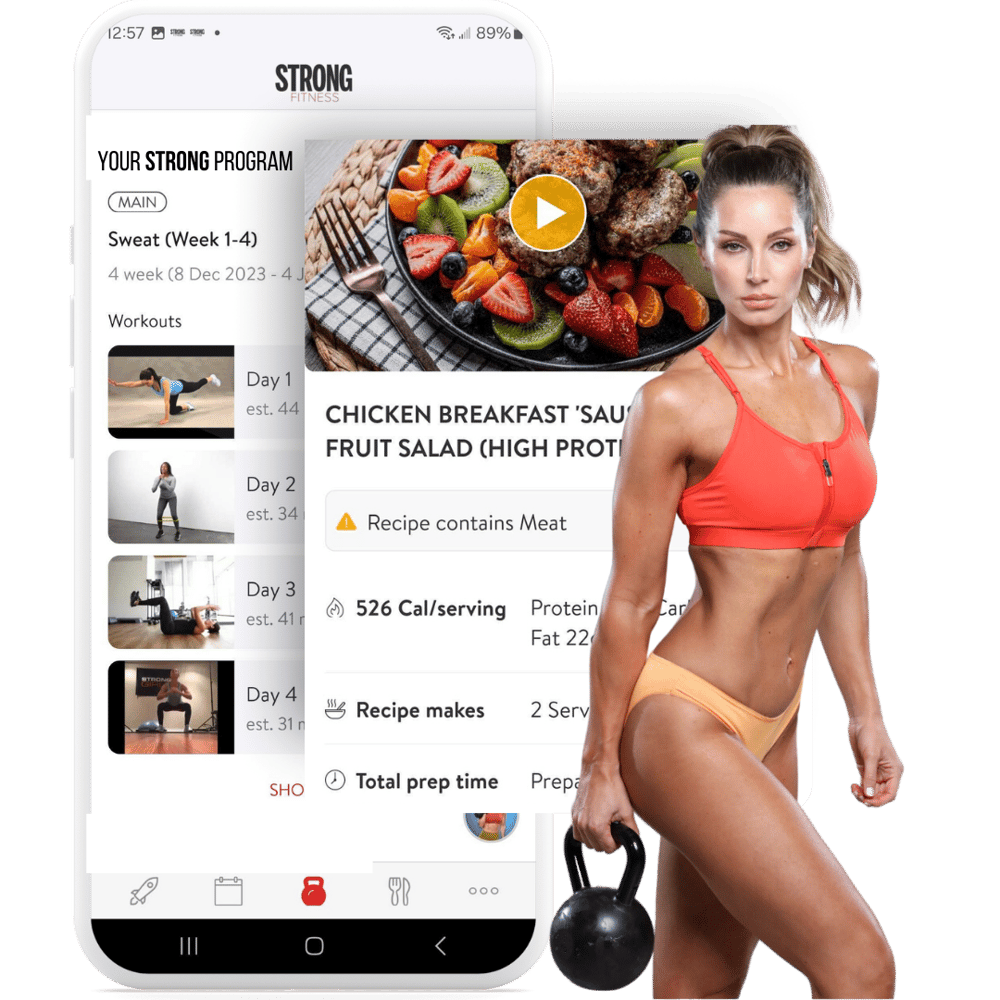
Personalized Fitness at Your Fingertips. Tailored workouts and meal plans, optimized for your lifestyle. Track and progress with every session, powered by the latest in fitness innovation.
AVAILABLE WITH DIGITAL, COMBO, AND PREMIUM SUBSCRIPTIONS

This site is not a part of the Facebook website or Facebook INC. Additionally, this site is NOT endorsed by Facebook in ANY WAY. FACEBOOK is a trademark of Facebook INC.
Privacy Policy | Terms of Use | Contact | 2532 Wharton Glen Ave. Mississauga, ON L4X 2A9, Canada
© Copyright 2024 - Strong Fitness Mag | All Rights Reserved | Site by sheinc.ca
With the participation of the Government of Canada.